
New to Art? Here Are Some Essentials You Should Know
A beginner's cheat sheet — no beret required.
The art world can feel like one giant inside joke if you didn't grow up surrounded by it. Realism? Surrealism? Conceptual art? What does any of it mean, and why does that guy get paid millions for a painting that looks like my toddler made it?
Deep breaths. Here's a quick, painless rundown of 10 major types of art — and how to spot them in the wild.
Realism — Realism is, in many ways, the "show your work" of the art world. There is no abstraction, no shortcut, just an unflinching commitment to what is actually there. Caravaggio pulls the viewer into visceral, theatrical drama. Edward Hopper does something quieter — his work creates a sense of beautiful, aching solitude that lingers long after you've looked away.
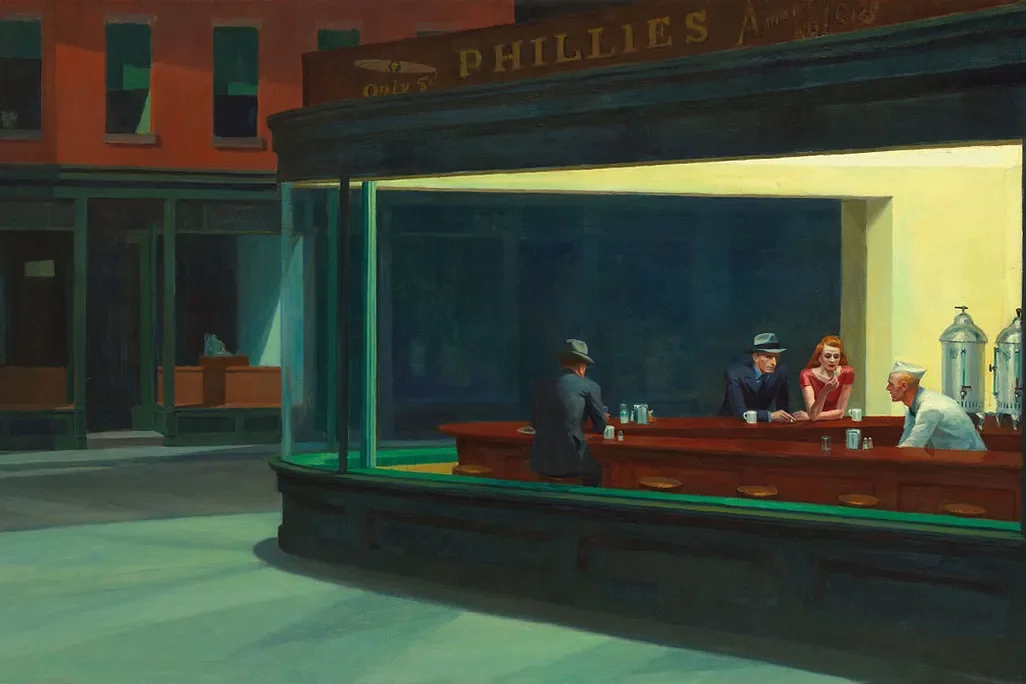
Nighthawks, 1942 by Edward Hopper
Impressionism — "It's like a painting, see? From far away, it's OK, but up close, it's a big old mess" — Cher from Clueless. You've probably heard that quote before. Well, she was talking about a famous Impressionist painter named Monet. Forget perfect detail; Impressionists were all about capturing a moment and the feeling of light. Think loose, dreamy brushstrokes and sun-dappled gardens. Monet, Renoir, and Degas are the rockstars of this movement. If you've ever loved a painting and thought "it's so soft and pretty," odds are it's Impressionist. Read more about it here.
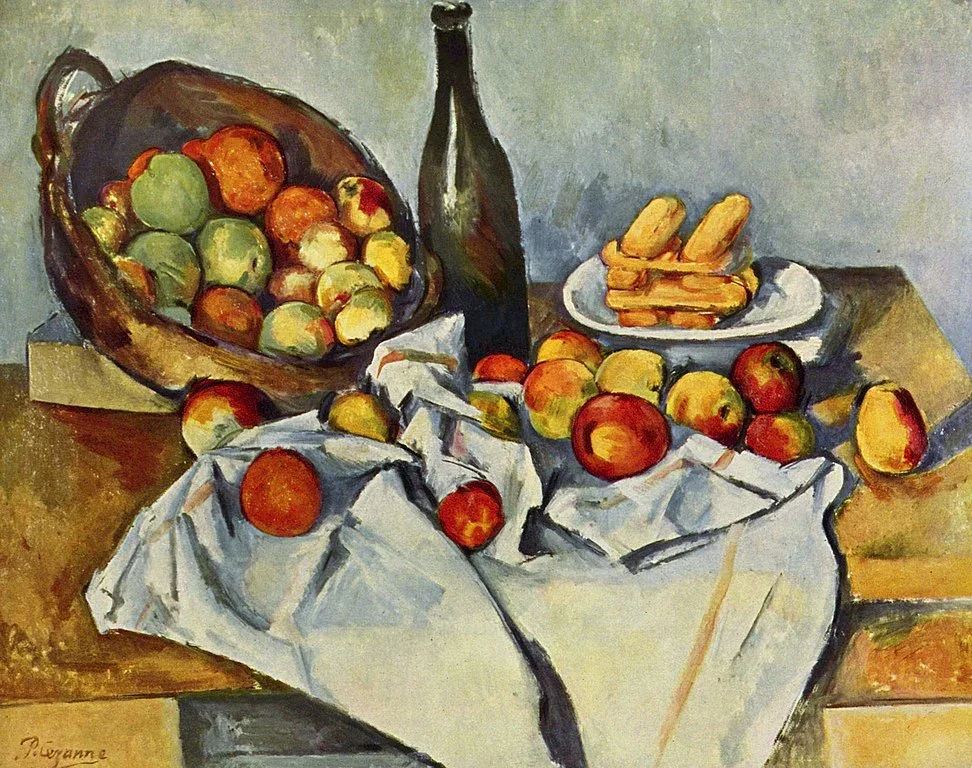
The Basket of Apples, 1894 by Paul Cézanne
Abstract Art — Wassily Kandinsky was one of my first favorite artists, and honestly, he might ruin you in the best way. His use of color and shape is wildly inventive — and what makes it even more remarkable is that most people at the time had no idea what to make of it. Abstract art doesn't represent real-world objects — or at least not obviously. It's about color, shape, line, and emotion. Yes, it can be the "what IS this even?" stuff that makes you feel slightly judged in a museum. But it can also be genuinely, unexpectedly moving in a way that sneaks up on you. Start with Kandinsky, then find your way to Rothko. Fair warning: you may never look at color the same way again.
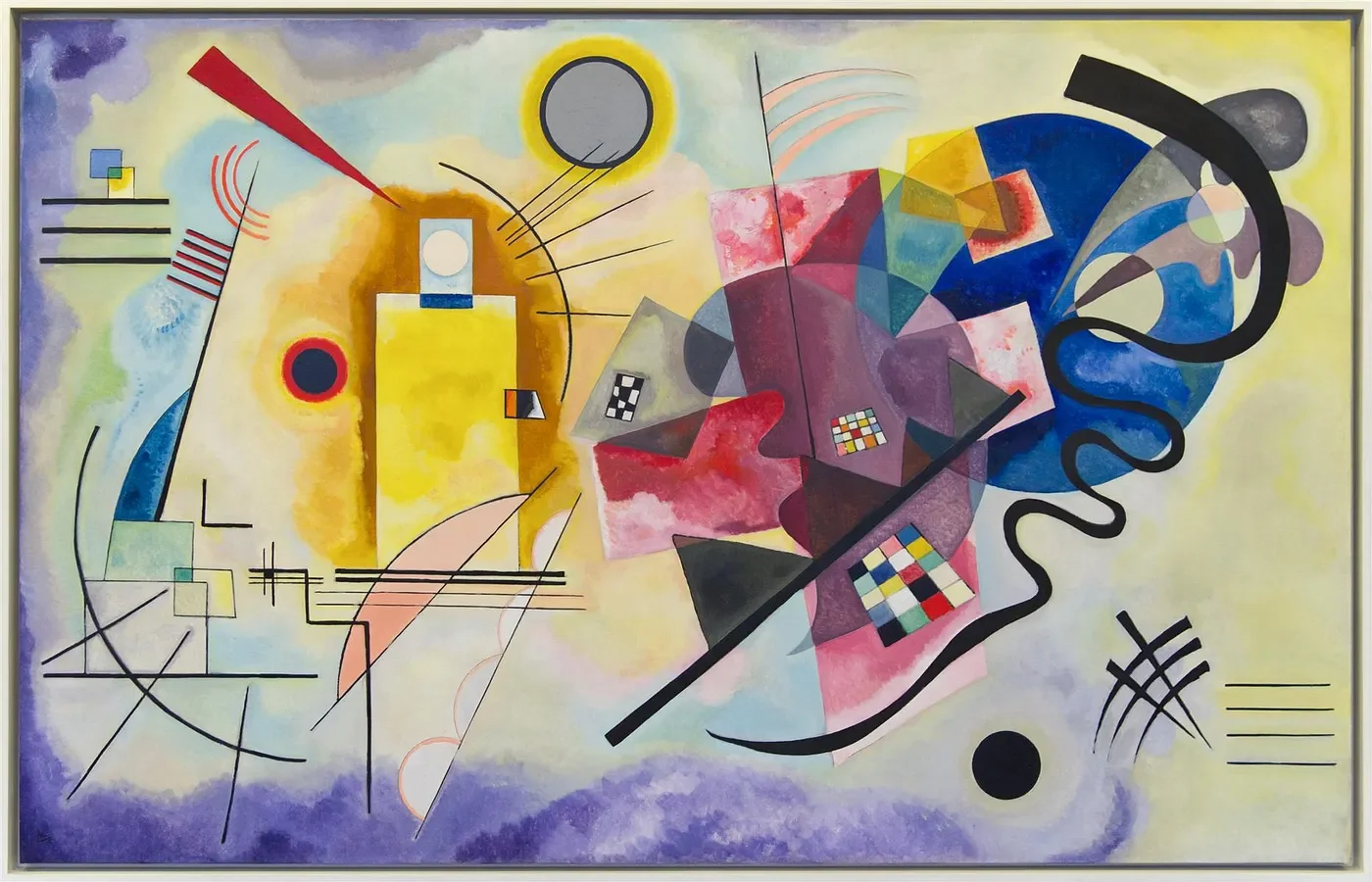
Yellow-Red-Blue, 1925 by Wassily Kandinsky
Surrealism — You can't fully appreciate Surrealism without knowing a little about Sigmund Freud. He was obsessed with the subconscious mind — dreams, desires, the strange thoughts you have at 3am. The Surrealists read his work and thought, yes, exactly, let's paint that. The result? Melting clocks, floating eyeballs, women made of drawers — imagery that feels like someone cracked open a dream journal and turned it into a gallery show. Salvador Dalí is the undisputed king of this very strange castle.
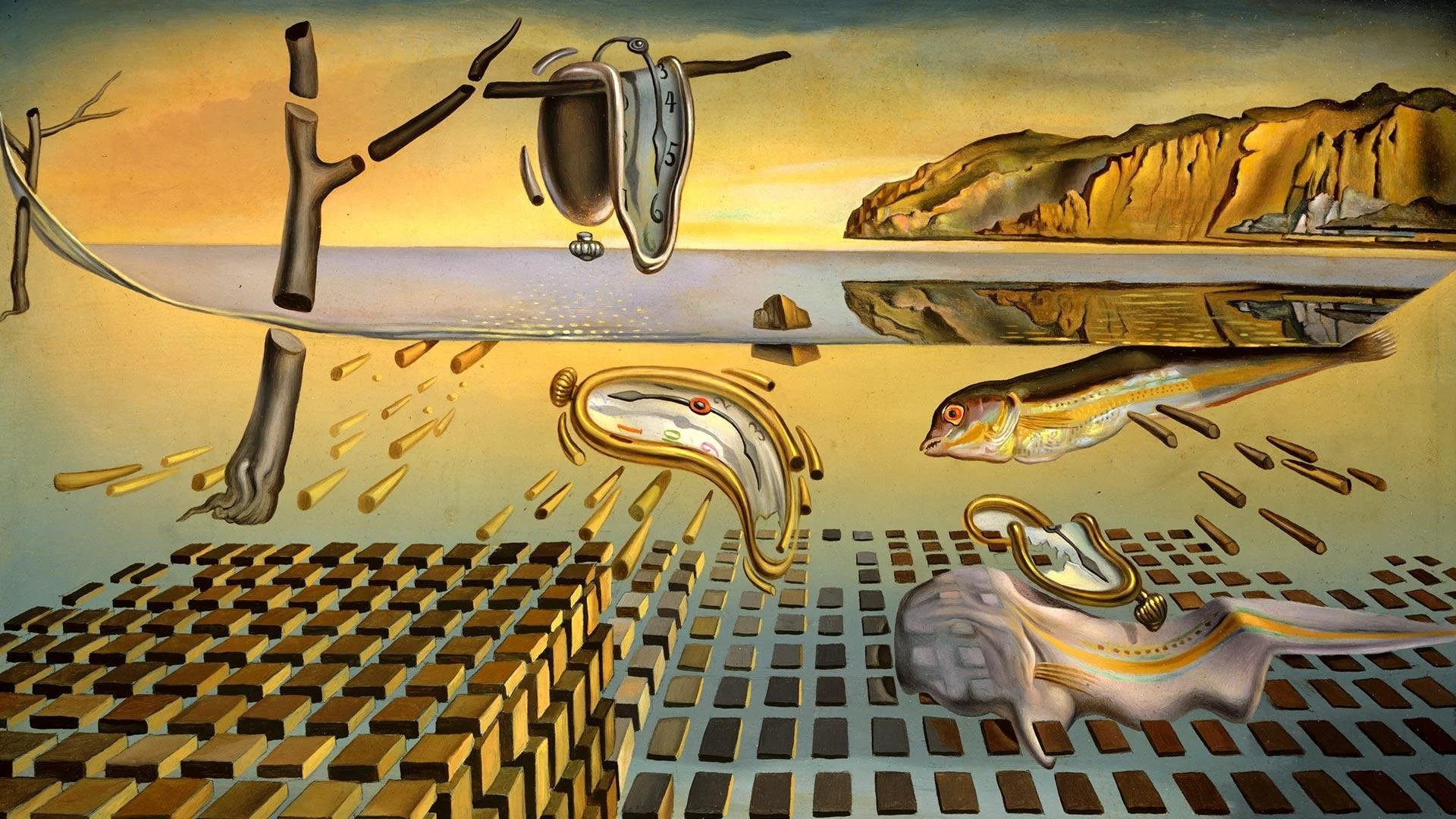
The Disintegration of the Persistence of Memory, 1954 by Salvador Dali
Pop Art — Art that celebrates (and sometimes parodies) popular culture and consumer products. Warhol's Campbell's Soup cans, Roy Lichtenstein's comic-book panels — bold, graphic, and often very fun. If it looks like it belongs on a retro poster, it's probably Pop Art.
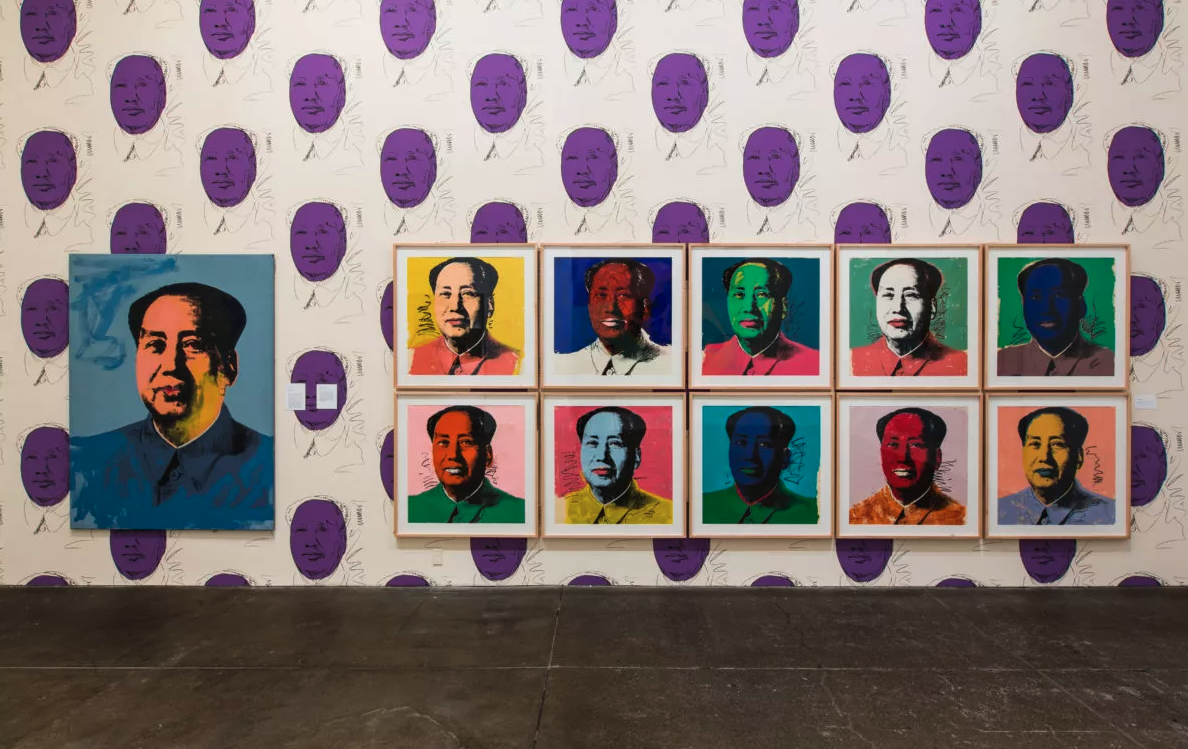
Mao, 1972 by Andy Warhol
Expressionism — All about raw, intense emotion — not always pretty, but always powerful. Figures are often distorted, colors are bold, and the vibe is deeply personal. Edvard Munch's "The Scream" is the ultimate mood board for this movement.
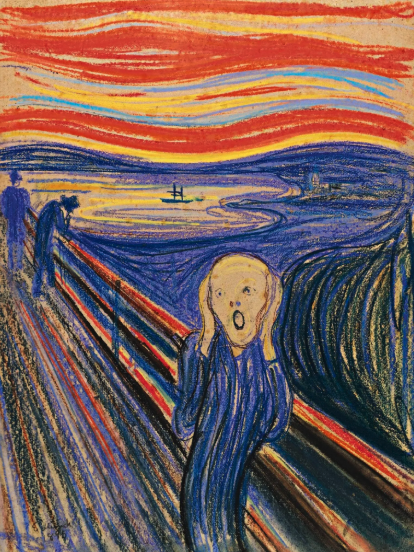
“Scream”, 1985 by Edvard Munch
Street Art & Graffiti — Born in cities, made for the public. From Banksy's sly political commentary to elaborate murals that transform entire neighborhoods, street art is one of the most alive and accessible art forms out there. And the best part? It's free to view.
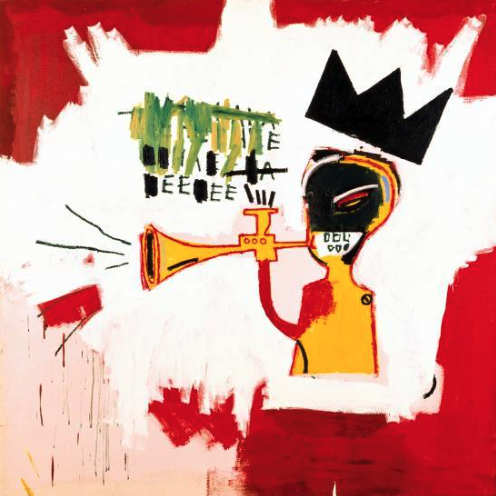
Trumpet, 1984 by Jean-Michel Basquiat